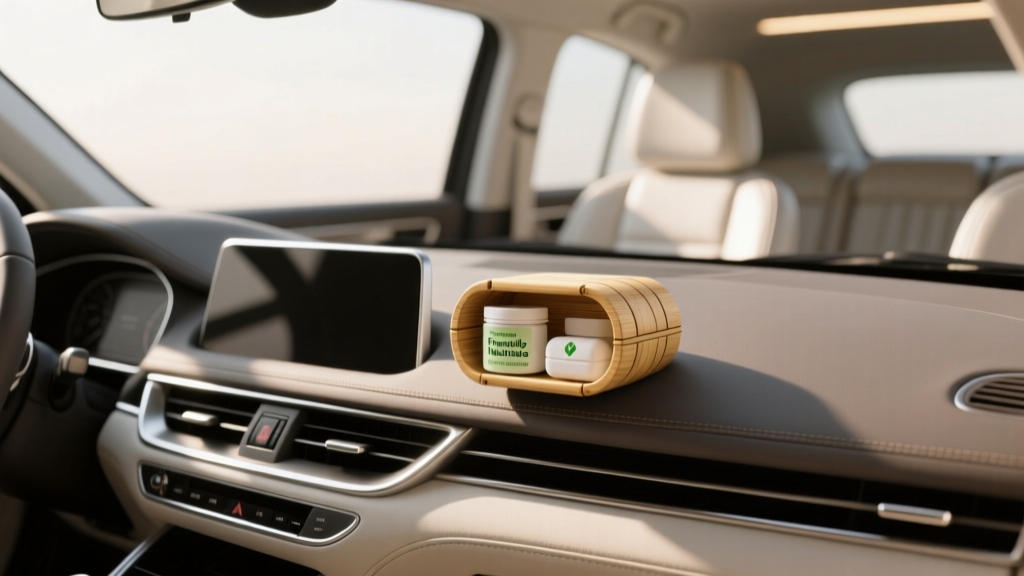
Eco-Friendly Medicine Box Mounts for Cars (2026)
Keeping a small medicine box in your vehicle can be a genuine lifesaver?think allergy tablets, motion-sickness meds, pain relief, bandages, or an EpiPen. The tricky part isn?t what to store, but where to store it so it?s secure, reachable, and doesn?t turn your cabin into a plastic-cluttered mess.
Most off-the-shelf mounts lean heavily on plastic brackets, strong permanent adhesives, or disposable sticky pads that end up in the trash every few months. If you care about a tidy car interior and a lighter environmental footprint, there are better options. Eco-friendly medicine box mount alternatives prioritize reusable materials, low-VOC adhesives (or none at all), and solutions that don?t damage interior surfaces?especially important if you lease your car or detail it often.
This guide walks through practical, real-world mounting approaches that work in modern vehicles, from glovebox and seatback strategies to reusable straps and 3D-printed brackets. You?ll get step-by-step setup instructions, product-style comparisons, common mistakes to avoid, and a simple checklist so you can install once and forget about it.
What Makes a Medicine Box Mount ?Eco-Friendly? in a Car Interior?
?Eco-friendly? can mean different things, but for car interior accessories it usually comes down to reducing waste, using safer materials, and extending product life.
Eco-friendly criteria that actually matter
- Reusable attachment method: Mechanical fastening, straps, or recloseable systems that don?t require replacing adhesive pads.
- Low-waste materials: FSC-certified wood/bamboo, metal, silicone, natural rubber, recycled PET webbing, or durable textiles.
- Low-VOC and interior-safe: Minimal off-gassing (especially important in hot cabins), and no harsh solvents.
- Non-destructive installation: Avoid drilling into trim, cracking plastic panels, or leaving permanent residue.
- Heat-aware: Materials and adhesives that won?t fail after a summer parked in the sun.
A quick reality check: heat beats ?green? every time
Your car can easily exceed 130�F (55�C) inside on hot days. If a mount fails and your medicine box becomes a projectile, you?ve traded sustainability for risk. The best eco-friendly option is the one that stays secure long-term and doesn?t force you to rebuy mounts and sticky pads.
Before You Mount Anything: Choose the Right Location
Placement affects safety, convenience, and medication integrity.
Best locations for a compact medicine box
- Glovebox: Discreet, protected from sunlight, and usually stable.
- Center console bin: Easy reach; can be warm depending on vehicle layout.
- Seatback pocket (rear of front seats): Great for family cars; not ideal for heavy boxes.
- Trunk side cubby: Best for a larger first aid kit, less ideal for daily-access meds.
- Door pocket: Convenient, but items rattle and can heat up fast; use only with a secure insert.
Locations to avoid
- On the dash or windshield area: Heat and UV exposure degrade meds quickly.
- Loose under a seat: Easy to forget and hard to access in an emergency.
- Hanging from vents: Blocks airflow; can fall off over bumps.
Eco-Friendly Mount Alternatives (That Actually Work)
1) Reusable strap mounts (webbing + buckle)
A strap mount is one of the most sustainable options: no adhesives, no drilling, and the parts last for years. Look for recycled PET webbing or durable cotton webbing and a metal cam buckle.
Best for: Mounting a medicine pouch/box to a seat rail, headrest posts (with care), trunk anchor points, or a cargo loop.
Pros:
- Zero adhesive waste
- Easy to move between vehicles
- Handles heat well
Cons:
- Needs an anchor point (rail, loop, or post)
- Can look ?utilitarian? if not color-matched
Step-by-step: mounting a medicine pouch using a strap
- Select a soft-sided medicine pouch with a sewn-in loop or D-ring. If your box is rigid, use a sleeve or a small organizer with loops.
- Pick an anchor point: front seat rail (not on moving parts), trunk cargo tie-down, or a fixed bracket under the seat.
- Route the strap so it doesn?t cross sharp edges or pinch points.
- Tension the buckle until the pouch doesn?t slide. Tug firmly to test.
- Do a seat movement check: slide the seat fully forward/back to confirm nothing binds.
Real-world example: In a compact SUV, a small medicine pouch strapped to a trunk cargo loop stays secure even on washboard roads and is accessible when the liftgate opens.
2) Silicone ?grip mat? tray + enclosed compartment (no mount needed)
If your glovebox or center console is slippery, a silicone grip mat can keep a small medicine box from sliding without adhesives. Choose a high-temperature silicone mat designed for automotive use.
Best for: Glovebox, center console bin, door pocket inserts.
Pros:
- Reusable and washable
- No residue, no tools
- Quiet?reduces rattles
Cons:
- Not a true ?mount? for vertical surfaces
- Less secure in a rollover scenario than a strapped solution
Step-by-step: using a silicone mat for a medicine box
- Clean the compartment (mild soap/water or interior-safe cleaner) and dry it fully.
- Trim the mat (if needed) so it lays flat without curling.
- Place the box so the lid opens without snagging on the compartment walls.
- Test for movement by doing a few brisk stops in a safe area.
3) Hook-and-loop, but eco-minded (sewn strips + replaceable pads)
Traditional hook-and-loop (often called Velcro) can be eco-friendlier when you avoid disposable adhesive squares and instead use sewn-on strips or a single high-quality, replaceable pad. The goal is to minimize replacement cycles.
Best for: Attaching a soft medicine pouch under a seat, inside a trunk side panel (carpeted), or inside a fabric-lined console.
Pros:
- Fast access
- Clean look
- Great on carpeted surfaces
Cons:
- Adhesive-backed versions can fail in heat
- Some surfaces (textured plastics) won?t hold well
Step-by-step: hook-and-loop on trunk carpeting
- Use a pouch with a wide loop panel sewn to it (or sew one on).
- Choose the location on trunk carpet where the pouch won?t get crushed by cargo.
- Press firmly to mate hook and loop panels.
- Check removal force: it should peel off intentionally but not pop off over bumps.
4) Mechanical mounts using existing screws (no new holes)
This is one of the best ?buy once? approaches: use a small bracket that piggybacks on existing fasteners?like glovebox screws, seat bolts (only if safe and accessible), or trunk trim screws. It?s low-waste and high-security.
Best for: Drivers who want a semi-permanent mount without adhesives.
Pros:
- Extremely secure
- No adhesive residue
- Clean, OEM-like finish if done neatly
Cons:
- Requires careful fitment
- Incorrect installation can cause rattles or trim stress
Step-by-step: mounting under glovebox using an existing screw
- Identify a suitable screw under the glovebox or lower dash panel that doesn?t secure airbags or critical components.
- Measure clearance for passenger knees and for glovebox opening.
- Use a thin metal bracket (or a high-strength 3D-printed PETG bracket) with a slotted hole.
- Remove the screw, place the bracket, then reinstall and tighten to snug?don?t over-torque.
- Attach the medicine box to the bracket using a strap or a small bolt-through clamp, depending on the box.
- Test for rattles by tapping and driving on a rough road.
Tip: Add a thin strip of cork or recycled rubber between bracket and trim to prevent squeaks. It?s a small eco-friendly touch that also improves fit and finish.
5) 3D-printed mounts using PETG or recycled filament
If you have access to a 3D printer (or a local maker space), a custom mount can be both eco-friendly and precise. PETG handles heat better than PLA, and some filaments use recycled content.
Best for: Custom-fit solutions (inside center console, behind trim gaps, in trunk cubbies).
Pros:
- Custom sizing for your exact medicine box
- Replace only the part you need
- Potentially less material waste than trial-and-error retail mounts
Cons:
- Design time required
- Poor designs can warp or rattle
6) Natural fiber pouches + carabiner clip (simple and sustainable)
Sometimes the best alternative to mounting a plastic ?medicine box? is switching to a durable pouch made from canvas, hemp, or recycled polyester, then clipping it to an existing anchor point. This reduces hard plastics and makes the kit easier to move.
Best for: Minimalists and daily drivers who want quick portability.
Setup idea: Canvas pouch + metal carabiner clipped to a trunk D-ring or seatback cargo hook.
Quick Comparison: Which Eco-Friendly Mount Style Fits Your Use?
- Most secure (no adhesives): Mechanical mount using existing screws
- Best balance of secure + easy: Reusable strap mount
- Best for glovebox/console: Silicone grip mat tray
- Best for carpeted trunk panels: Sewn hook-and-loop
- Most customizable: 3D-printed PETG bracket
- Most portable: Natural fiber pouch + carabiner
Product-Style Recommendations (Materials and Features to Look For)
Rather than pushing a specific brand, here are specs that consistently perform well in real cars.
For strap-based mounting
- 1-inch (25 mm) webbing in recycled PET or heavy cotton
- Metal cam buckle (more heat-stable than some plastic buckles)
- Rubberized or silicone strap keeper to reduce rattling
For silicone grip mats
- High-temp rated silicone (automotive-grade is ideal)
- Texture that grips but doesn?t leave an oily film
- Easy-clean surface (dust and crumbs happen)
For hook-and-loop systems
- Sewn-on loop panel on the pouch (avoids adhesive failure)
- Wide surface area (2?3 inches / 50?75 mm) for better hold
- If adhesive is unavoidable: choose 3M VHB-style tape sparingly and only on compatible surfaces
For mechanical brackets
- Thin stainless steel or aluminum (corrosion-resistant)
- Slotted holes for adjustability
- Padding layer (cork, recycled rubber, or felt) to prevent squeaks
Common Mistakes to Avoid
- Mounting in direct sun: Even the best mount won?t protect medication from heat and UV on the dash.
- Relying on cheap adhesive pads: They soften in summer heat, then fail when you hit a bump.
- Blocking airbags or safety systems: Avoid A-pillar trims, steering column areas, and seat-mounted airbag zones.
- Mounting to moving seat mechanisms: Seat rails and tracks can pinch straps and wear them quickly.
- Storing meds without a plan for temperature: Some medications should not be kept in a hot car. Ask a pharmacist if you?re unsure.
- Choosing a box that?s too big: Oversized kits slide around, rattle, and encourage bad mounting choices.
Practical Tips for a Cleaner, Safer Setup
- Use a soft pouch inside a hard box: A pouch reduces noise and protects blister packs from cracking.
- Label the kit clearly: A small tag helps family members find it fast.
- Do a monthly check: Replace expired items and confirm nothing has leaked or melted.
- Add a QR card: Keep a small card with emergency contacts and allergy info (especially for family vehicles).
- Keep it reachable from the driver?s seat: Glovebox or console is often better than the trunk for daily meds.
FAQ: Eco-Friendly Medicine Box Mount Alternatives
What?s the most eco-friendly way to secure a medicine box without adhesives?
A reusable strap mount anchored to an existing point (cargo loop, seat frame bracket, trunk D-ring) is typically the greenest and most reliable option. It creates almost no consumable waste and holds up well in heat.
Is hook-and-loop (Velcro-style) eco-friendly for car interiors?
It can be, if you use sewn-on panels and avoid disposable adhesive squares. Hook-and-loop is also great on carpeted trunk liners where it doesn?t require glue.
Can I mount a medicine kit under the seat?
Yes, but do it carefully. Avoid seat tracks and moving mechanisms, and make sure nothing can snag wiring. A strapped pouch attached to a fixed seat frame area is usually safer than adhesive solutions under the seat.
Will a silicone grip mat melt or damage interior plastics?
Quality silicone mats are generally stable in automotive temperatures and don?t leave residue. Avoid unknown rubbery mats that feel oily?those can stain or soften some plastics over time.
What?s the best spot for medications that are sensitive to heat?
No car interior is truly temperature-controlled when parked. If medication is heat-sensitive (common with certain injectables), the best practice is to carry it with you in an insulated pouch rather than leaving it in the vehicle.
Do 3D-printed mounts hold up in summer heat?
PETG generally performs much better than PLA in warm cabins. Design also matters: thicker walls, fewer sharp corners, and mechanical fastening (rather than relying on adhesive) improves durability.
Actionable Next Steps
- Pick your location: glovebox/console for daily access, trunk for a larger kit.
- Choose your mount style: strap for best all-around, silicone mat for simple compartments, mechanical bracket for a semi-permanent OEM-like install.
- Do a safety check: confirm no interference with airbags, seat movement, or pedals.
- Set a reminder: monthly quick inspection and expiration check.
A well-mounted medicine kit is one of those small upgrades that makes your car feel more prepared and more thoughtfully organized?without leaning on disposable plastics and one-time-use sticky pads.
Want more practical car interior setup ideas and smart storage guides? Browse the latest how-tos on carinteriormix.com.